5th May 2026
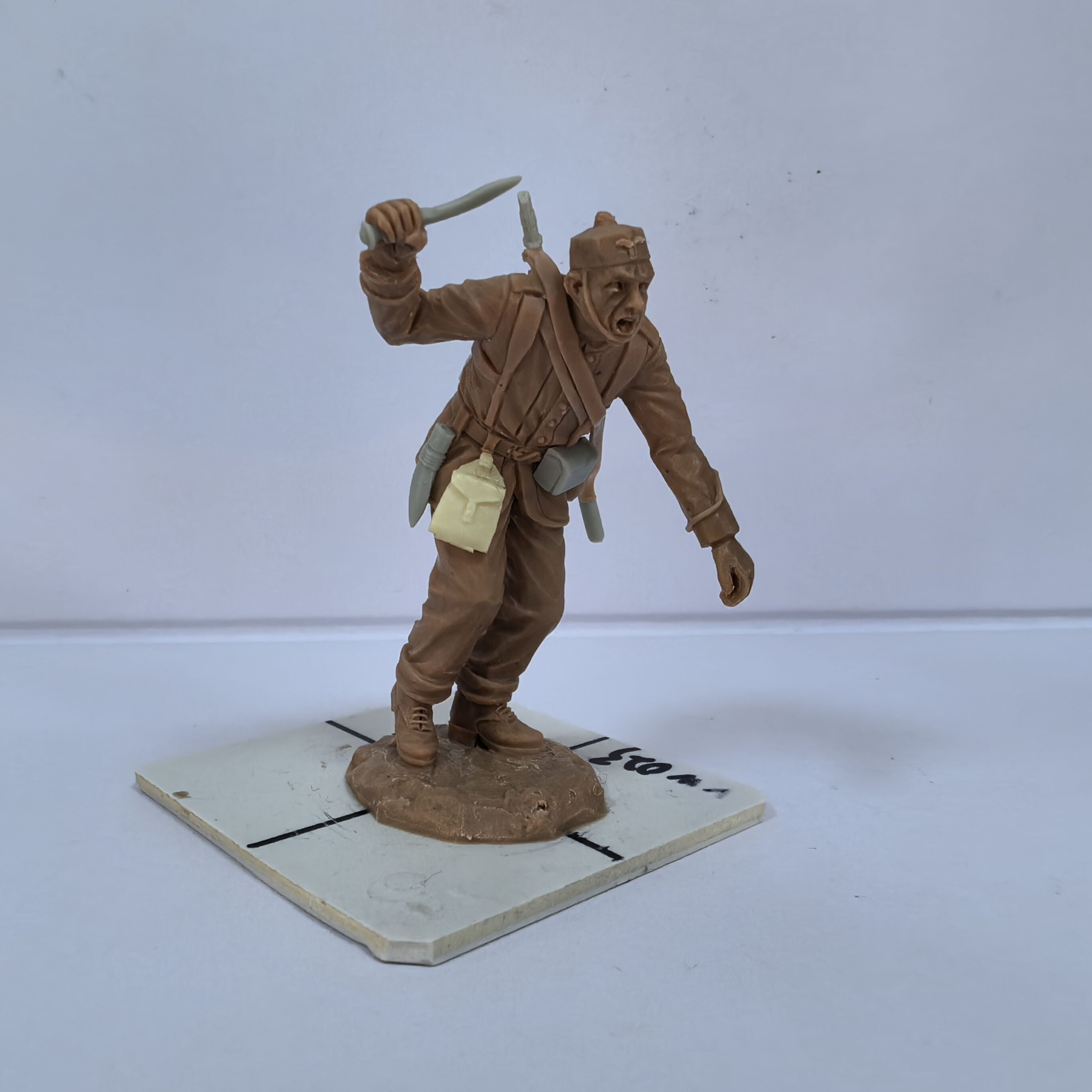
Thomas Gunn Preview: Second Afghan War
The Gurkhas or Gorkhas, are soldiers native to South Asia and mainly from Nepal, with communities also found in some parts of Northern India and Myanmar formerly called Burma.
The Gurkhas are widely recognized for their long history of military service and are known for their discipline, bravery, and loyalty. Gurkha soldiers have served in various national and international military forces, especially the British and Indian armies, and remain a symbol of courage in military history.
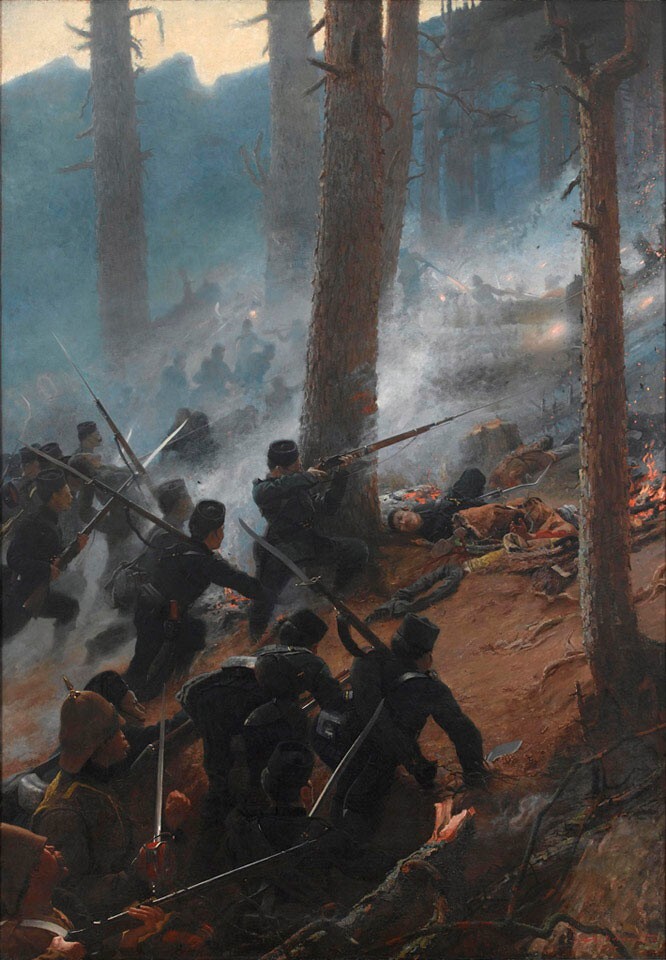
This long history of service can be traced back to The Anglo-Nepalese War, which was fought between the Kingdom of Nepal and the British East India Company as a result of border disputes and ambitious expansionism of both belligerents. The war ended in 1816 with the British recognizing the quality and potential of the Gurkha soldiers they had been fighting against.
During the war the British used defectors from the Gurkha army and employed them as irregular forces. William Fraser a British political agent had such confidence in their loyalty that in April 1815 he proposed forming them into a battalion under Lt. Ross, calling them the Nasiri Regiment. This regiment, which later became the 1st King Georges Own Gurkha Rifles, then saw action at Malaun Fort under the leadership of Lt. Lawtie, who reported that he "had the greatest reason to be satisfied with their exertions".
About 5,000 men entered British service in 1815. These groups, eventually lumped together under the term Gurkha, became the backbone of British Indian forces.
During the Indian Mutiny of 1857, Gurkhas fought on the British side and became part of the British Indian Army on its formation.
Three days after the rebellion began, the Sirmoor Gurkha Battalion was ordered to move to Meerut, where the British garrison was barely holding on, and in doing so they had to march up to 48 kilometres a day. Later, during the four-month Siege of Delhi, they defended Hindu Rao's house, losing 327 of 490 men. During this action they fought side by side with the 62th Rifles and a strong bond developed between the two Battalions.
After the rebellion the 60th Rifles pressed for the Sirmoor Battalion to become a rifle regiment. This honour was granted in 1858 when the battalion was renamed the Sirmoor Rifle Regiment and awarded a third colour. In 1863 Queen Victoria presented the regiment with the Queen's Truncheon, as a replacement for the colours that rifle regiments do not usually have.
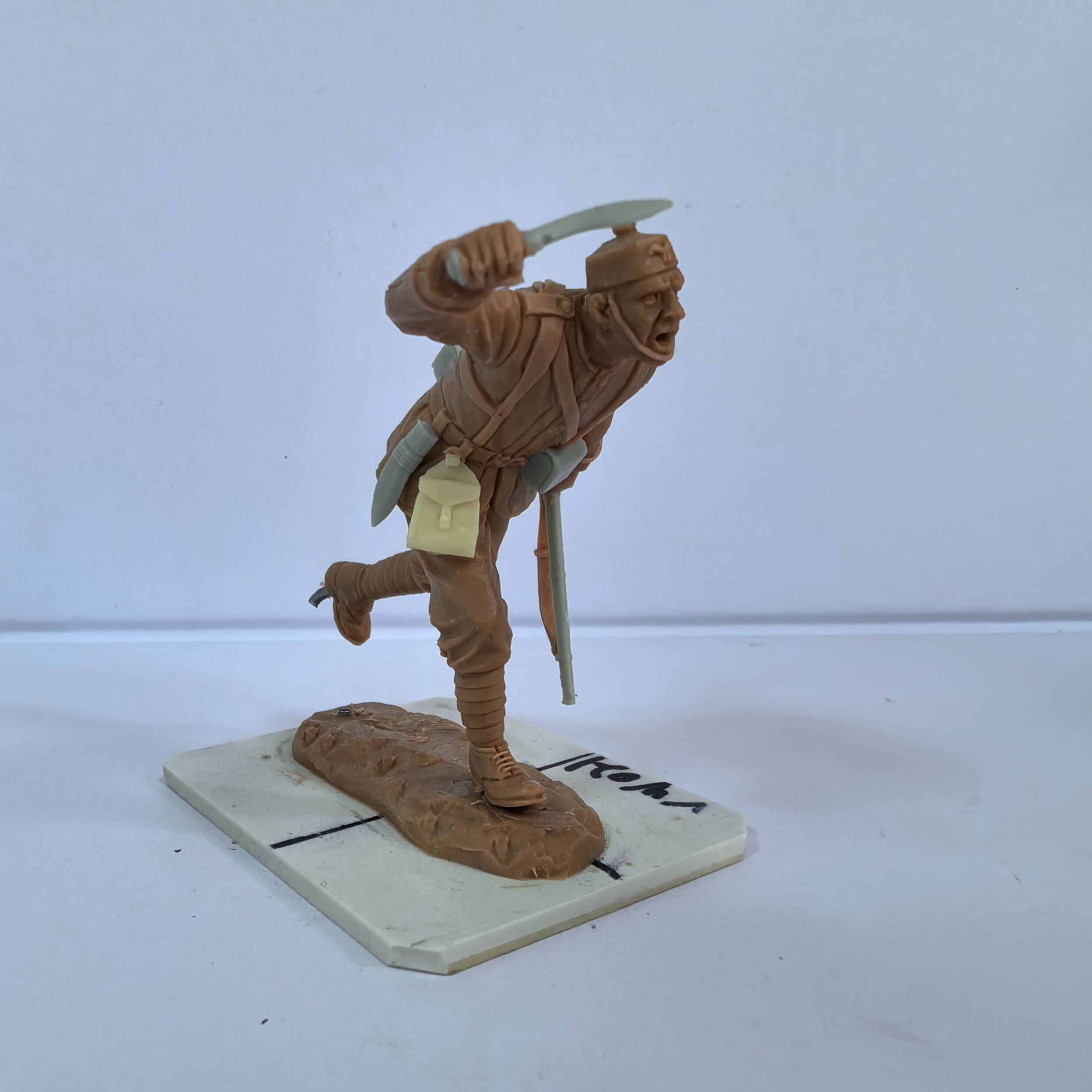
From 1858 until WW1 the Gurkha's served in Tibet, North West and North East India, Afghanistan, Cyprus, Malta, Burma and China and in other conflicts.
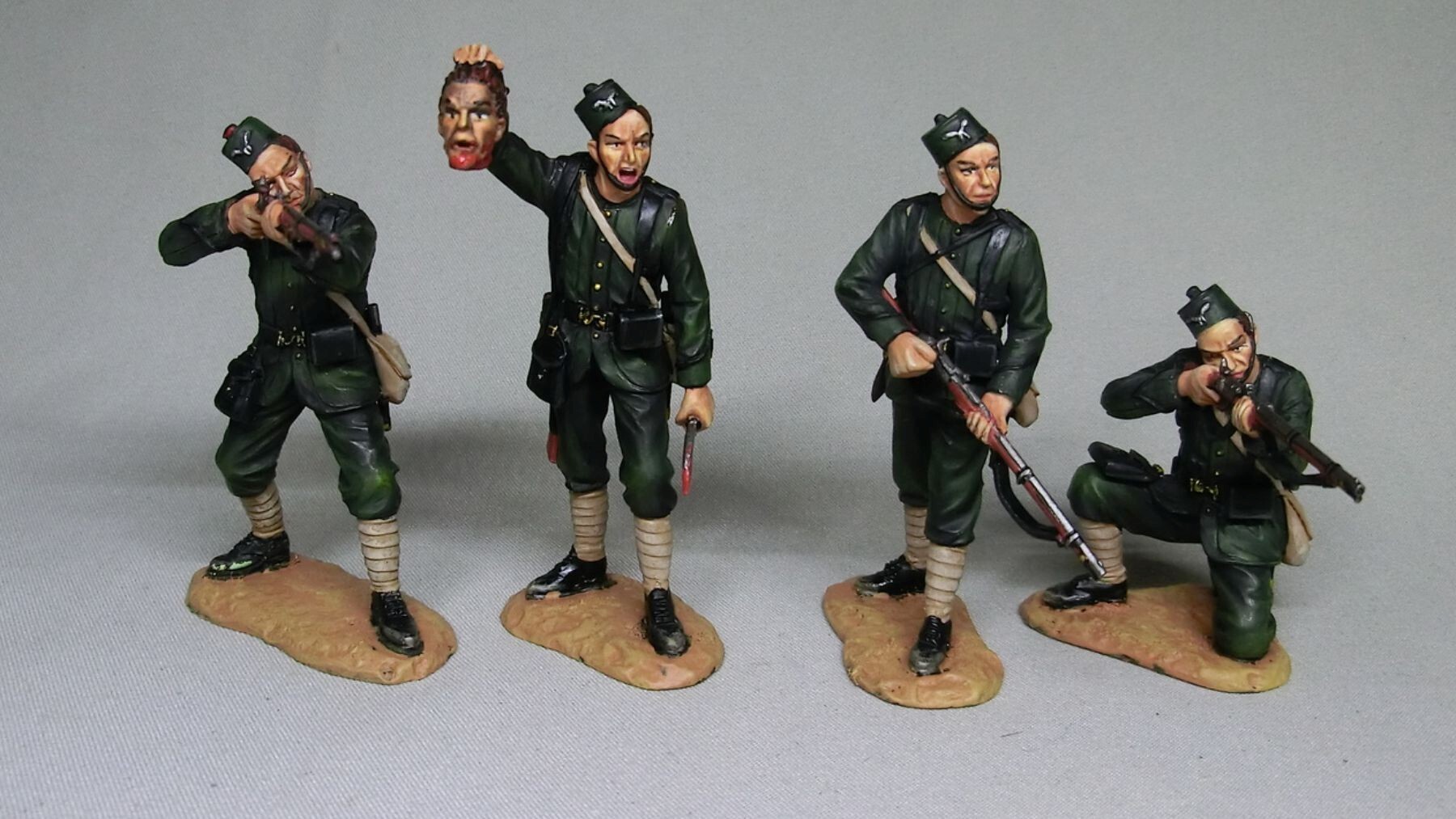
Our first figures feature the 5th Battalion in combat at Peiwar Kotal Afghanistan, where they fought in their green uniforms due to the cold weather. Khaki clad Gurkhas will follow, as well as a piper, officer command group, artillery and an Afghan enemy for the Gurkha's.
As if this was not enough for collectors, we will also be offering lesser well known, but very colourful additions to the war fought on the North East Frontier during the same period. These will feature Indian Sepoys, Frontier Police as well as insurgents.