
1st Oct 2026
John Jenkins Preview: The Battle of Zama: Carthaginian allies: Iberinan Scutarii and Caetratii
The success of Carthage in bringing most of central and southern Iberia under its control was a crucial element in their continued ability to pursue the war against Rome.
Iberian troops probably fell into two rough classifications, the Scutarii and the Caetratii.
These types basically defined the type of shield, with the Scutum being a large flat oval shield with a wooden spine and metal boss.
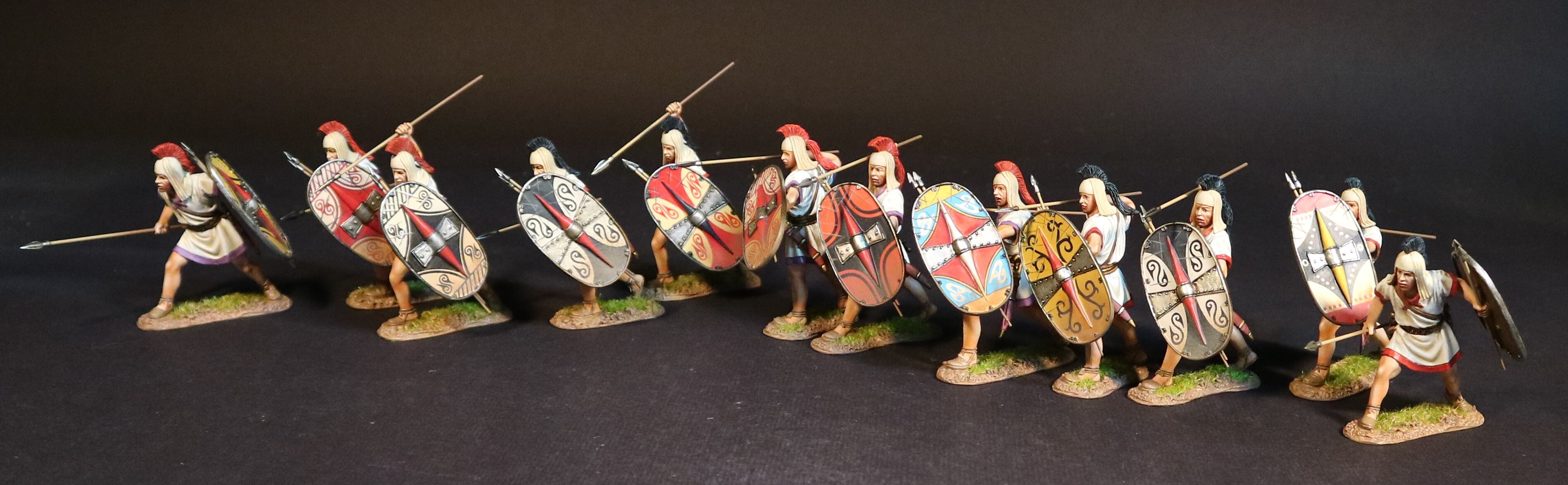
Iberian warriors had been fighting as mercenaries throughout Europe since the 5th century BC, with their ferocity in battle and their fighting skills making them very good additions to any ancient army.
The Carthaginian general Hannibal made excellent use of them during his campaigns against Rome during the second Punic War.
The Romans eventually defeated Carthage, but it took another 200 years to fully conquer and pacify the Hispania region.
THE SCUTARII
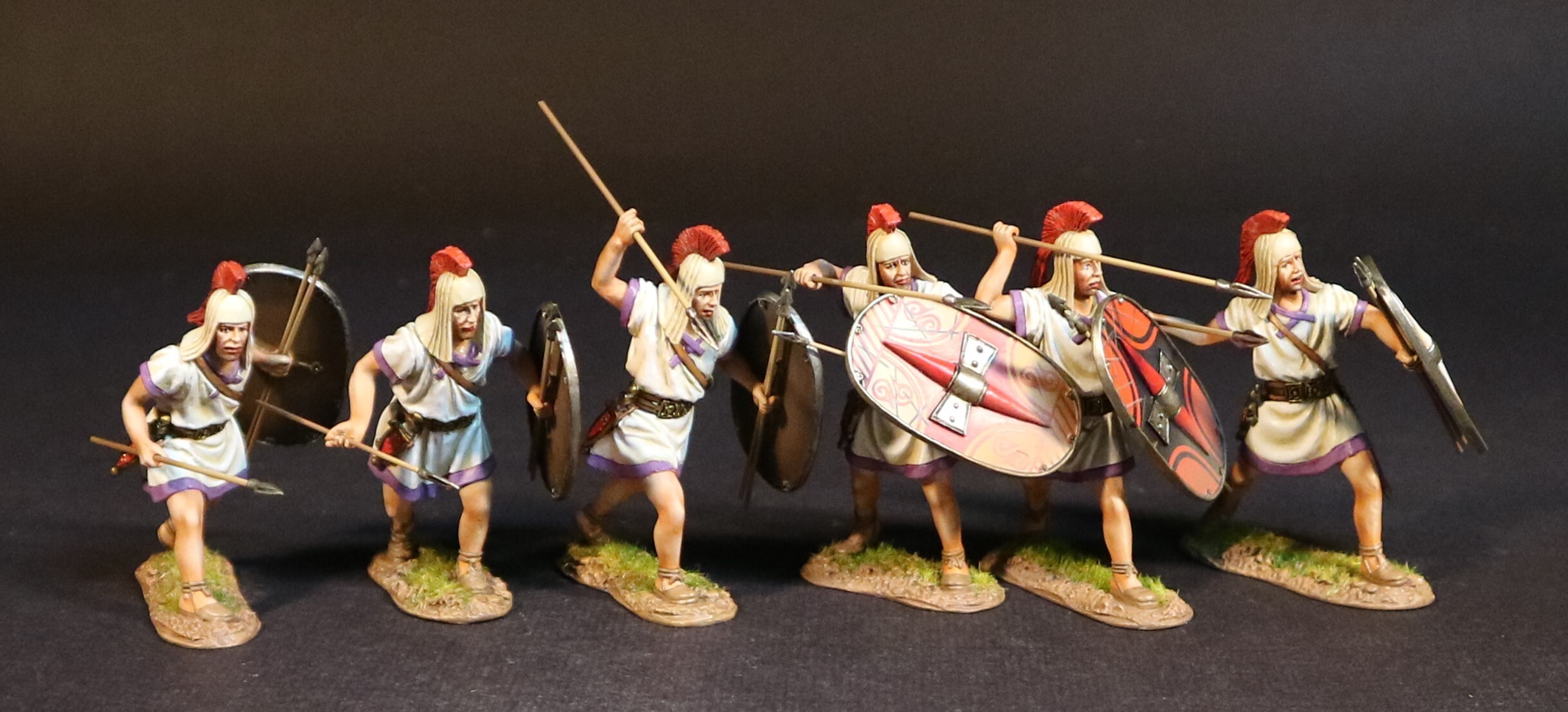
These warriors fought vigorously against the Romans, especially under the leadership of Viriathus the Lusitanian, and his guerilla tactics that the Romans had never encountered before. The warriors being agile by nature, and wearing almost no armour were extremely mobile and would use hit and run tactics to harass the enemy and break their formations.
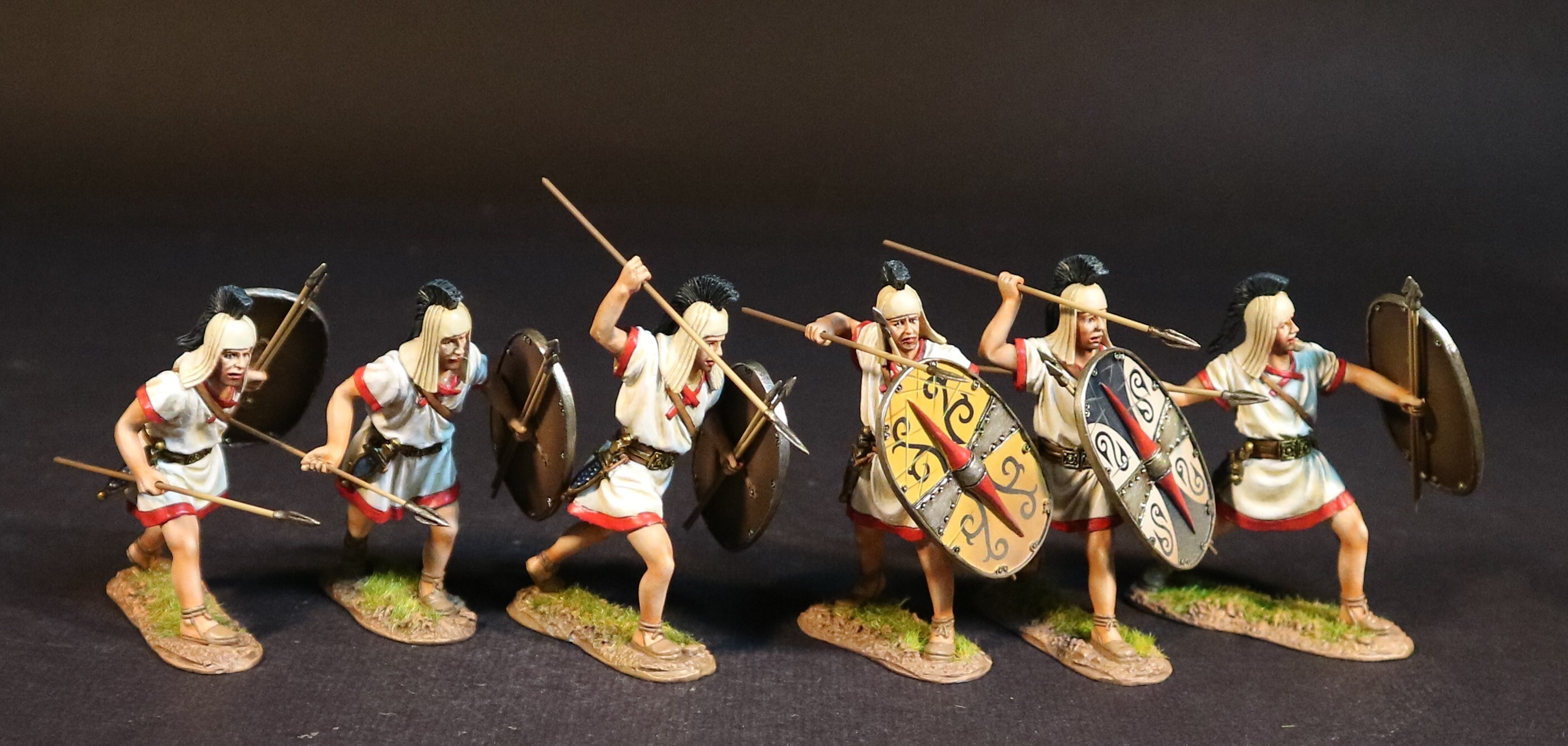
THE CAETRATI
The Caetrati were a type of light infantry from ancient Iberia who fought as skirmishers. They were armed with a Caetra shield, sword and javelins.
The Caetra was a flat, small round shield with a circular metal boss.
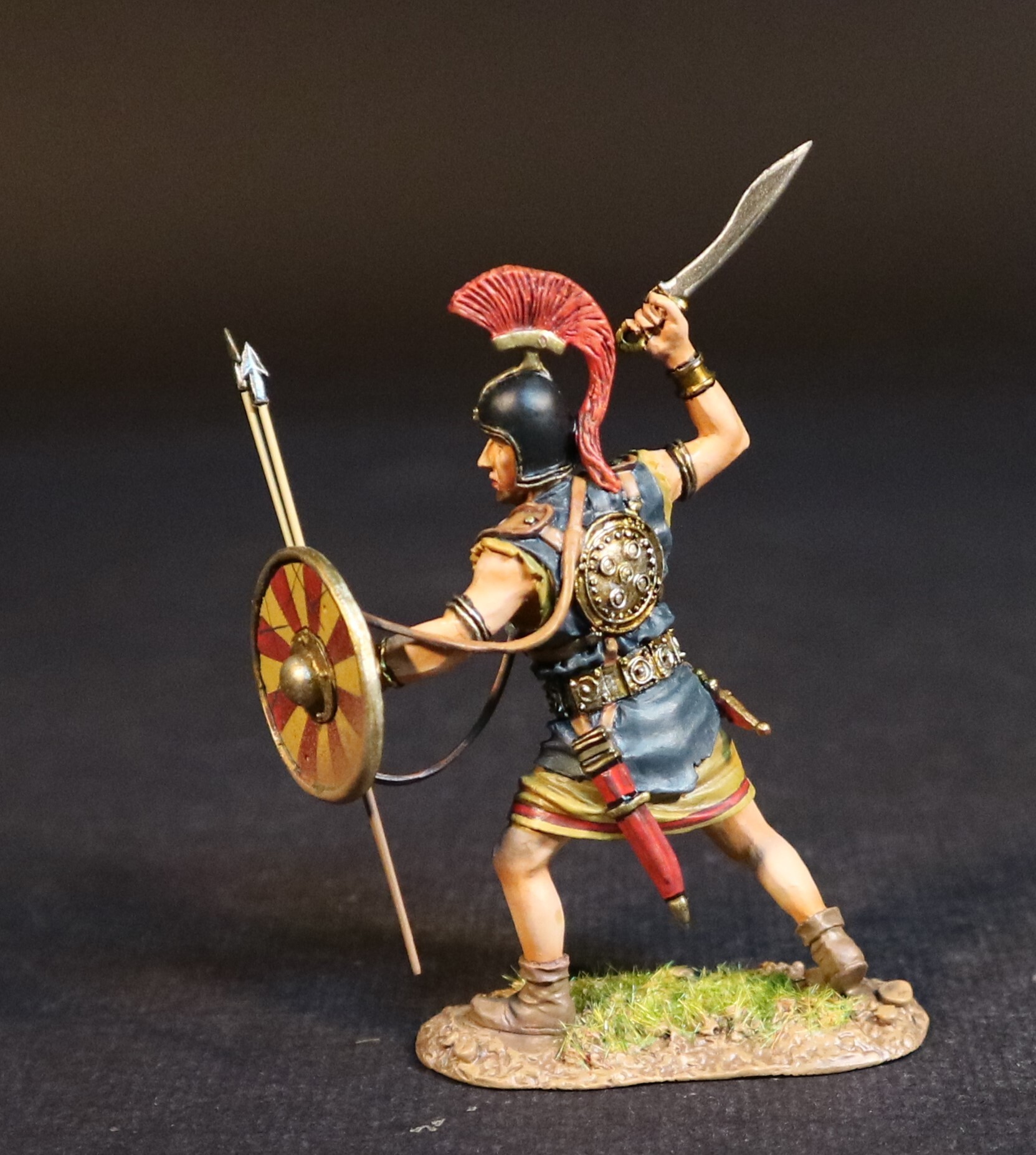
The sword which the Caetrati carried was called the Falcata, and it made these warriors some of the finest swordsmen of their time. Large amounts of these swords have been found on excavation sites throughout Portugal and Spain.
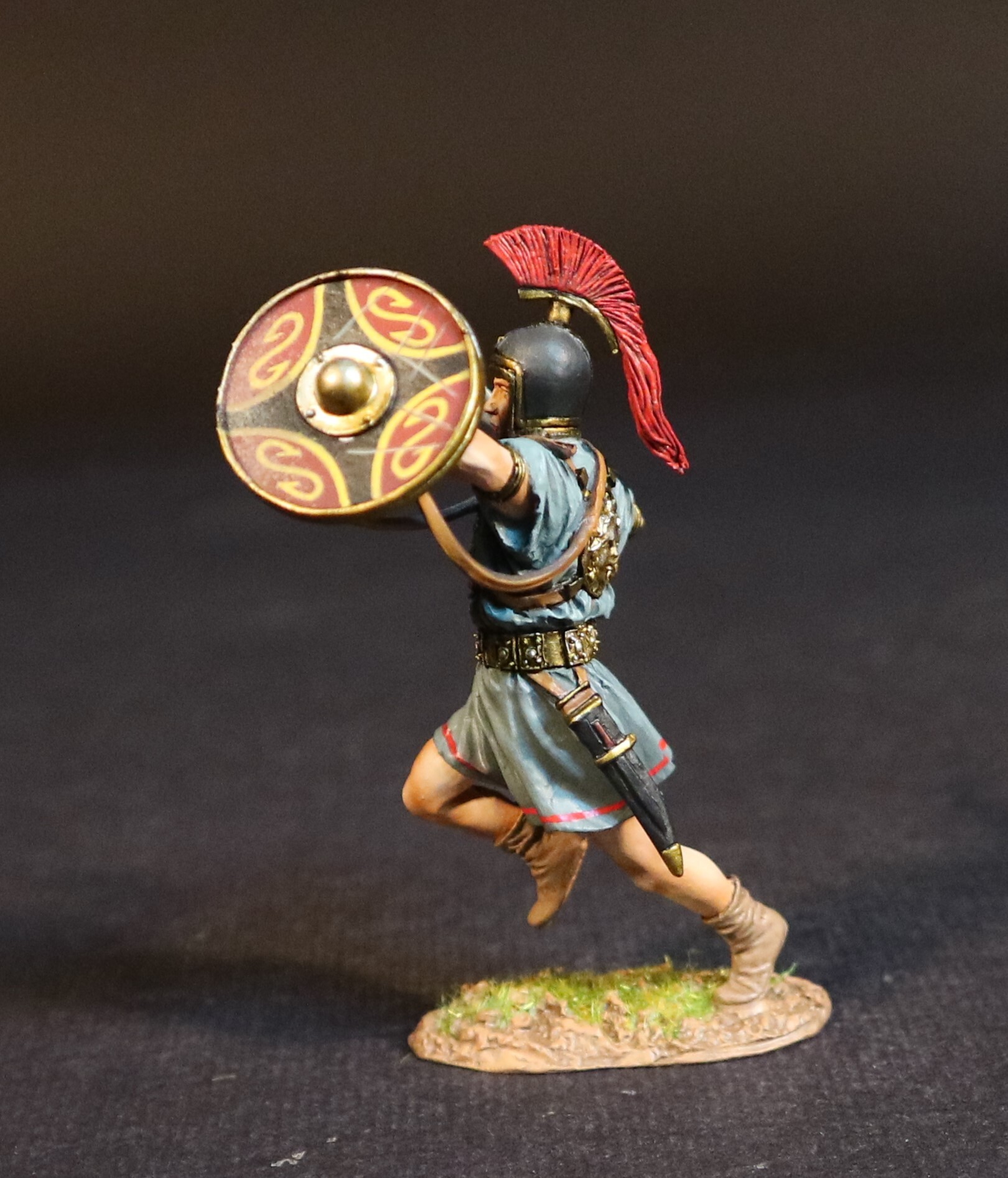
Lusitanian warriors maintained a spiritual connection to their swords and when they died their swords were buried with them. Diodorus reports that the Falcatas were of such superior quality that no helmet, shield or bone could resist its devastating effect.
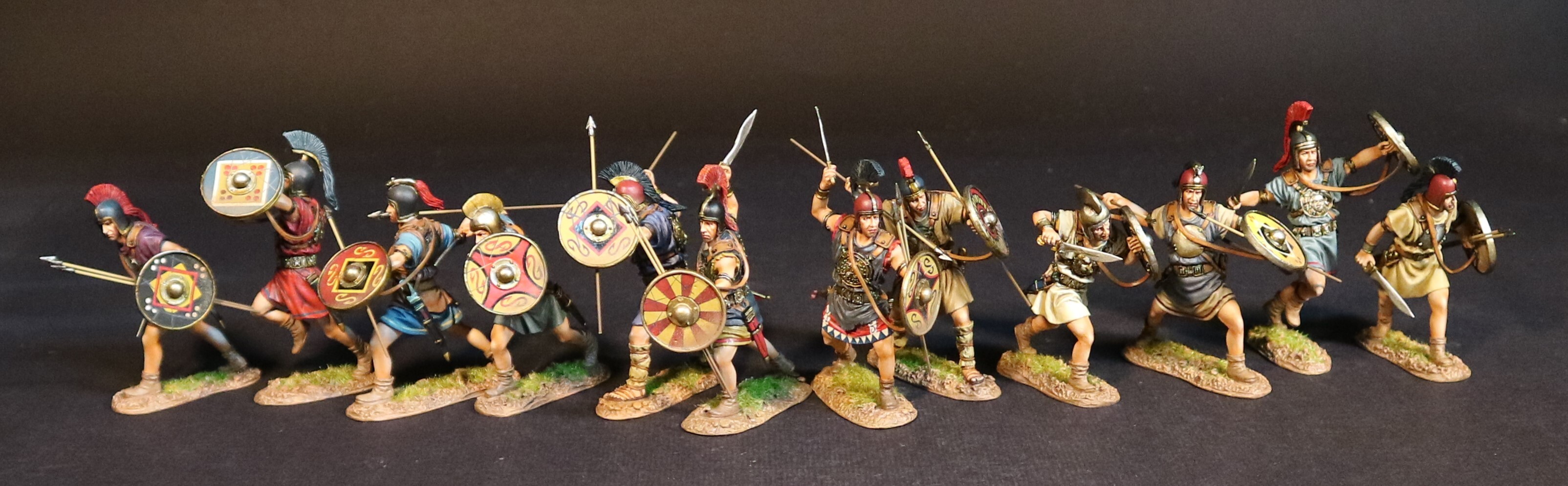
THE SAMNITES
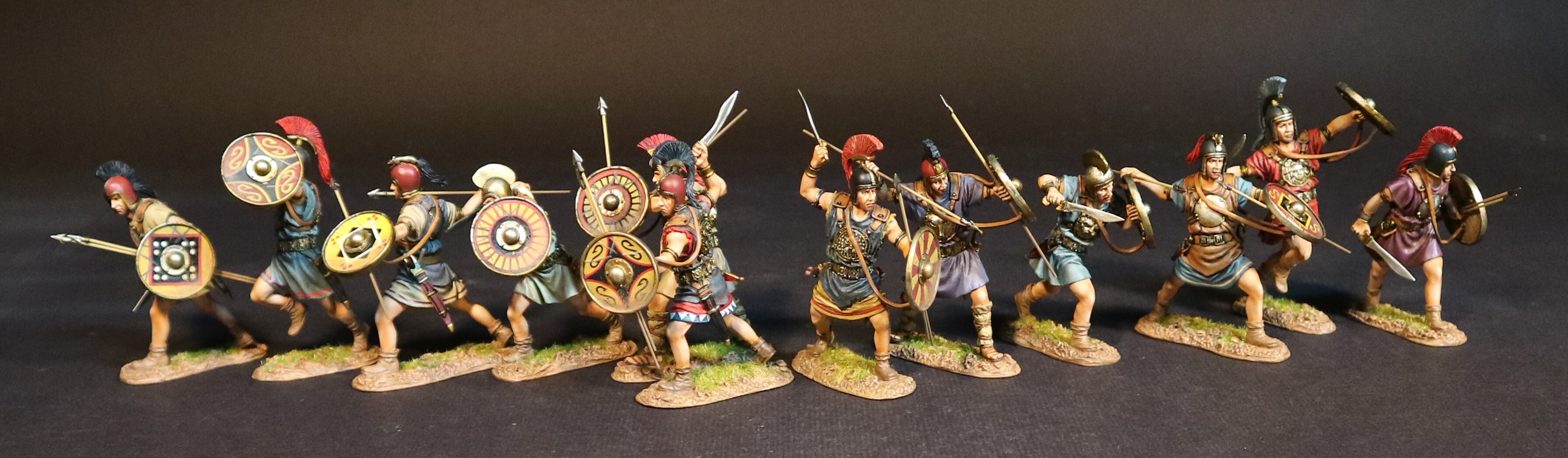
The Samnites and their relatives in central and south Italy are known as Oscans, from the name of their language.
The Samnites were the largest and most important Oscan nation, and was made up of a league of four tribes, the Pentri, Caudidi, Hirpini and Caraceni.
The Samnites fought a series of wars with Rome from 343 to 272, and were by far Rome’s most formidable Italian foe. Many Samnites were later to join Hannibal.
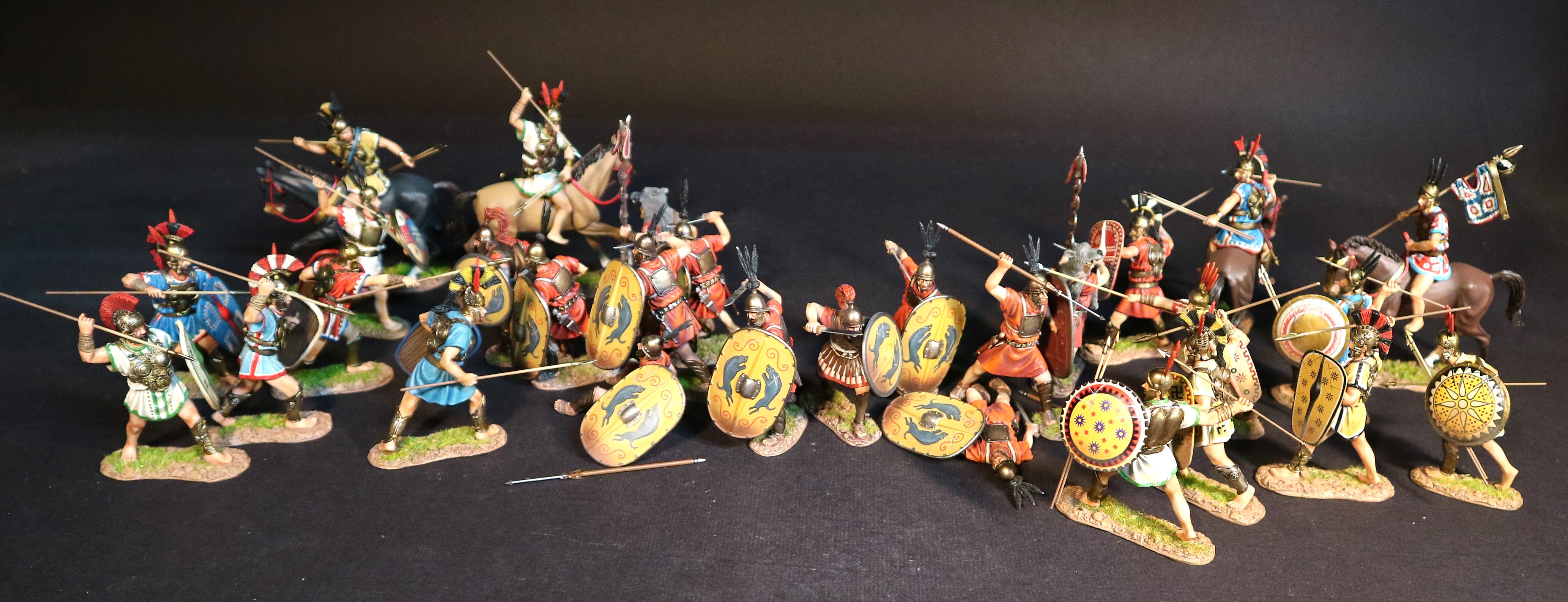
Livy the early Roman historian states that the Samnites fought in a loose phalanx formation in the form of a square, which was tactically flexible and more suited to their hilly terrain.
The Greek style phalanx was a formidable weapon especially from the front. But it was not flexible and once in contact with the enemy was vulnerable on its unprotected flanks and rear. It also need level, open terrain for its cohesion. The Romans had used the Phalanx to great effect along the coastal plains, but war in the constricted terrain of the mountainous spine of central Italy meant the Roman phalanx was a failiure. The Samnites did well in mobile warfare and were well used to mountain ambushes.
The Roman phalanx with its advantage of brute stength would probably defeat the Samnites on the level plain, but the Romans had to learn different tactics when confronted by the Samnites.
The large legion was therefore developed into three lines, with each line in turn broken up into small blocks capable of independent manoeuvre.
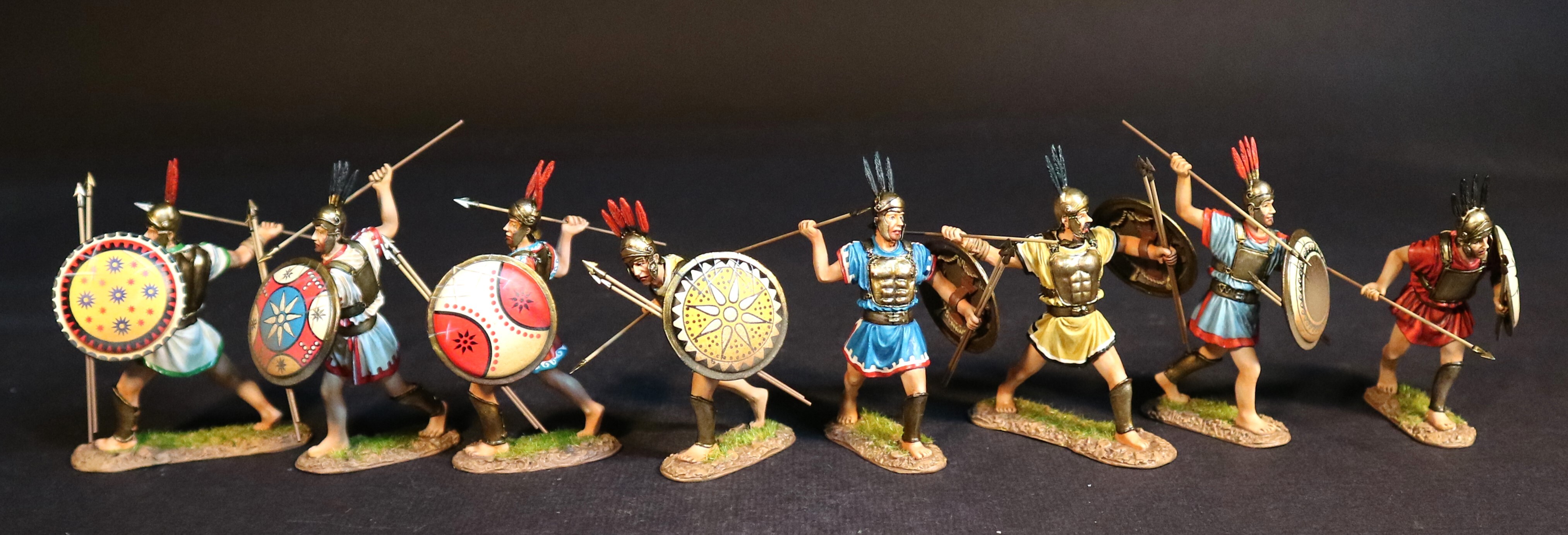
Samnite tunics were brightly coloured and decorated, and there is little evidence of uniformity.
Their weapons included the javelin and short spear. There was a mixture of oval and round shields, and many infantry wore a distinctive cuirasse of Italian design. Small breast and backplates of leather backed bronze linked by hinged straps of similar construction passing over the shoulders and under the arms. The commonest type was the triple disc style.
PLEASE NOTE THESE WILL NOW BE THE LAST SETS OF THE SAMNITES.
THE FIRST SETS OF THE IBERIANS WILL BE RELEASED IN DECEMBER.