30th Jun 2026
John Jenkins Designs: Zulu War preview
VOLUNTEERS, IRREGULARS AND AUXILIARIES: FRONTIER LIGHT HORSE AND NEWCASTLE MOUNTED RIFLES
The Frontier Light Horse was originally raised in 1877 by Lt. F. Carrington, for service in the ninth Cape Frontier War. The FLH drew their recruits from the Kingwilliamstown district of the Eastern cape.
The FLH fought under Captain Robert Johnston Barton, Coldstream Guards, in Wood’s Column during the Anglo Zulu War.
They were to act as a rearguard at Hlobane on the 28th March 1879 where over 30 of the 156 members were lost. Captain Barton, the commanding officer was killed.
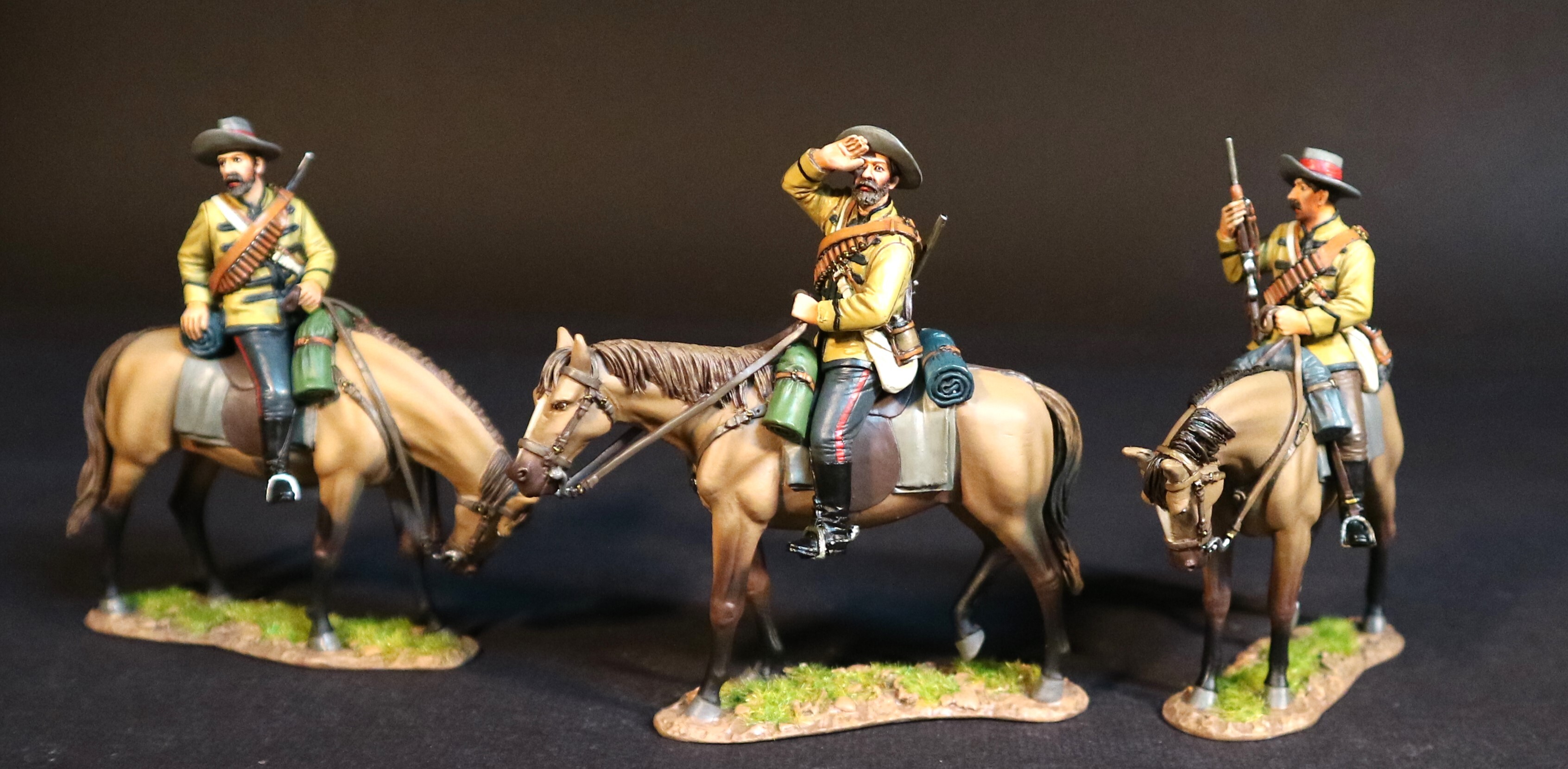
The next day they were to serve in the Battle of Khambula and took part in the advance of their column into Zululand.
Later that month Captain C.D’Arcy was to take command of the unit.
They were also present in the Battle of Ulundi on the 4th July 1879, and at the end of that year the unit was disbanded.
Two members of the Frontier Light Horse, Captain Cecil D’Arcy and Sergeant Edmund O’Toole were awarded the Victoria Cross for their acts of valour in endeavouring to save the lives of soldiers during the reconnaissance made before the Battle of Ulundi on the 3rd July 1879
Initially Troops were grouped according to their horse colours, A Troop had bays, B Troop chestnuts, and C Troop greys.
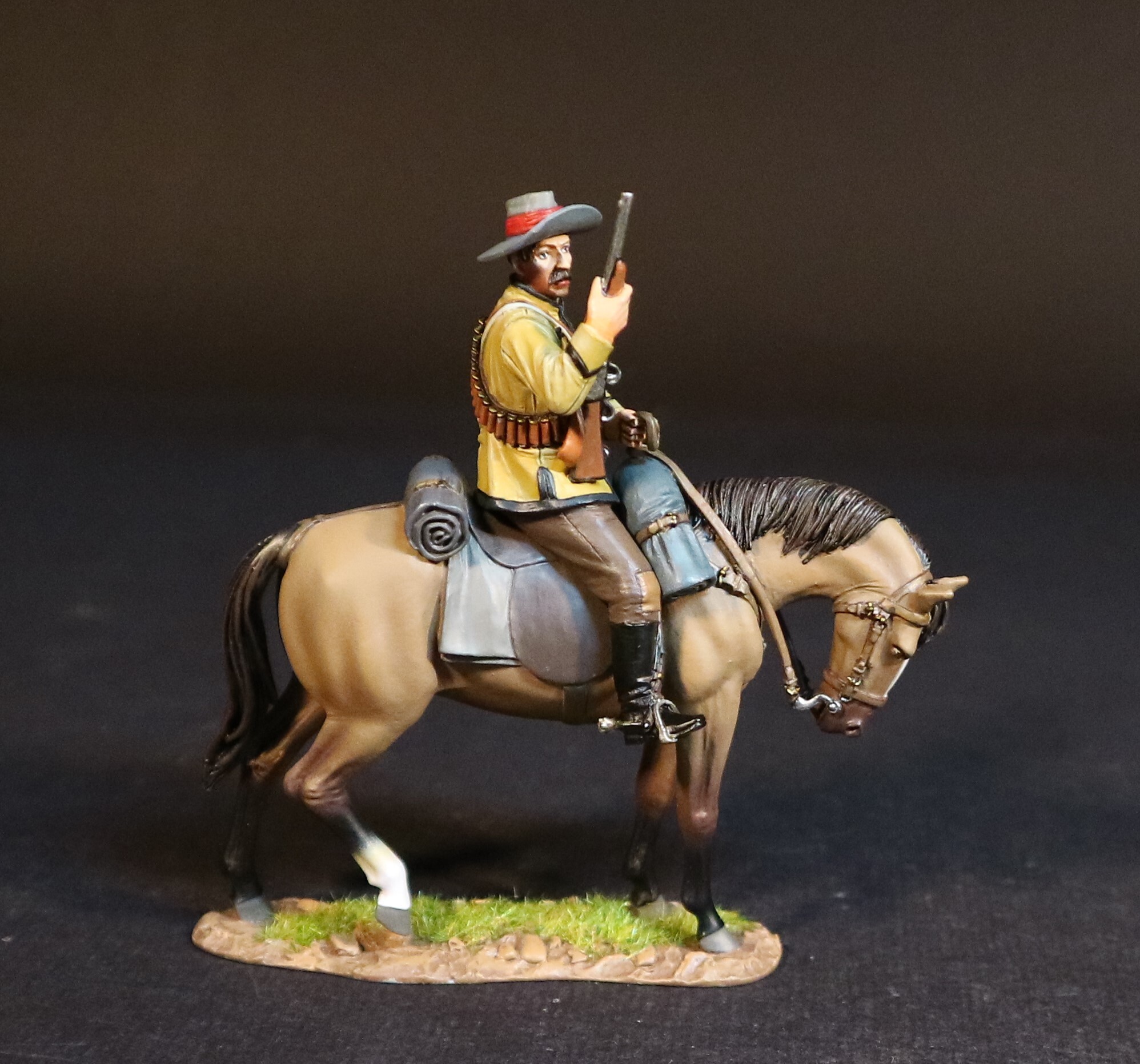
Initially the troopers uniform when formed was described by a lieutenant in 1878 as comprising black cotton cord suits with red facings, “ammunition “ boots with gaiters and a wide brimmed hat, known locally as a “smasher” with a strip of red cloth wound around the crown.
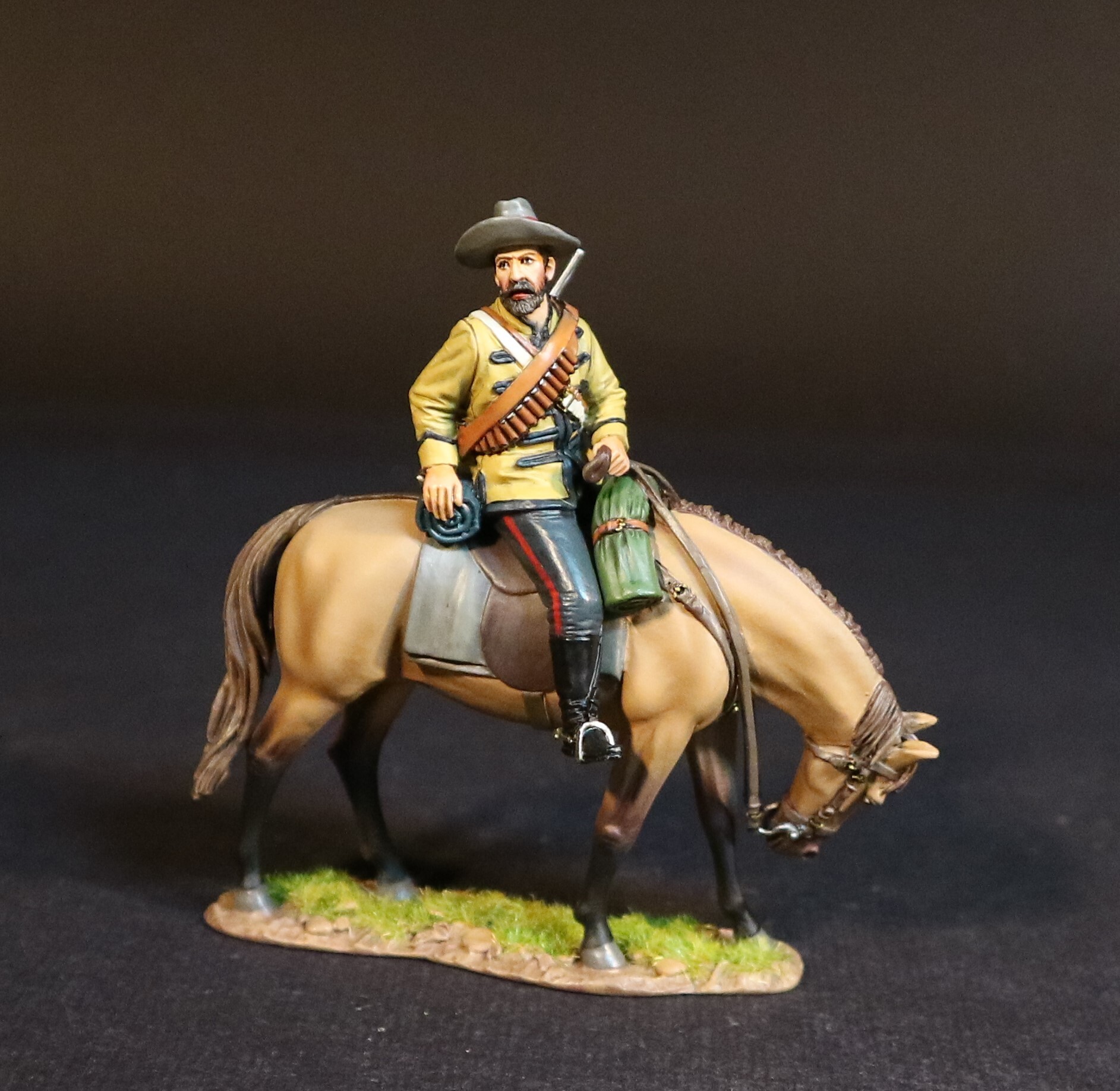
The Kingwilliamstown tailors were of course unable to maintain a source of uniforms and new recruits would receive various combinations of tunics and trousers in black or yellow/brown cord.
Later when equipped in the Natal an attempt to provide uniforms of yellow/brown cord, decorated with five rows of black braid across the chest, or single breasted with black braid edging.
Trooper G. Mossop who enlisted on 6th January 1879 reported that initially he received no uniform, just a red cloth to wind around his hat.
There was a constant fluctuation of strength of the FLH throughout the war which saw many changes in uniform and horse colour.
NEWCASTLE MOUNTED RIFLES
Although established in 1864, it was another 11 years before the town of Newcastle, the most northerly in Natal, contributed to the ranks of the volunteers, forming the Newcastle Mounted Rifles in October 1875.
The creation of the unit proved popular and by the end of the year 46 men had enrolled. The local Resident Magistrate, Melmoth Osborn, received the vote to become captain.
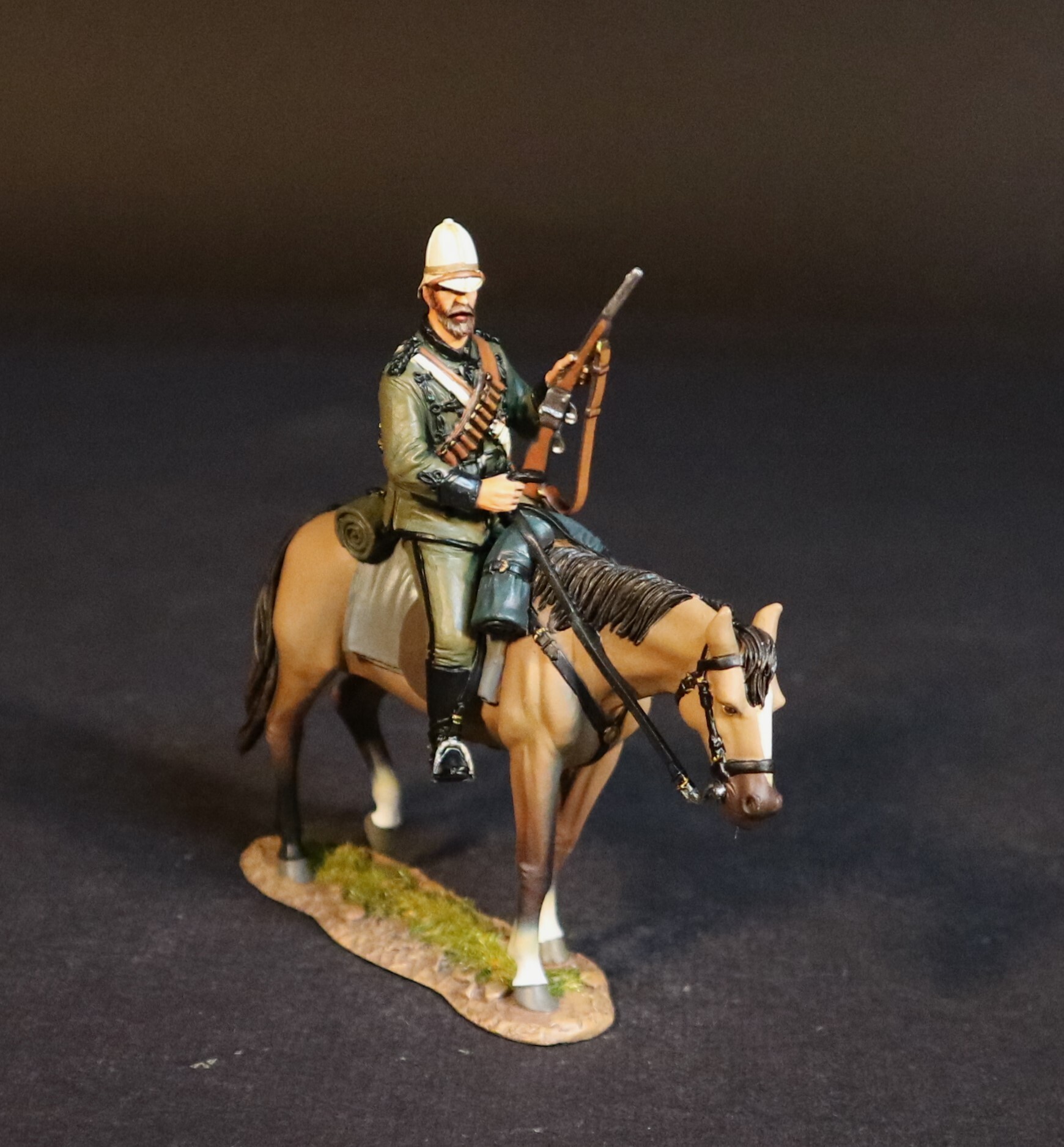
The Newcastle MR joined the Natal Carbineers and Buffalo Border Guard at Helmekaar early in December 1878 as No.3 Column concentrated for the Zulu War.
The tunic of dark green cloth had a collar of black velvet edged with black braid and a V-shaped black velvet cuff facing edged with black braid ending in a trefoil knot.
The tunic was edged with black braid and decorated across the front with five rows of black braid ending in double drop loops fastened with olivets.
Shoulder cords were of twisted black braid, dark green trousers bore a black dtripe down the outside seam.
The unit is shown in a photograph with white helmets without spikes, and there is no evidence of a regimental badge, although all other Volunteer Corps possessed them.