
25th Aug 2026
John Jenkins Designs Preview: The Battle of Albuera
THE PENINSULAR WAR
THE BATTLE OF ALBUERA, 16th MAY 1811.
“A STORM OF LANCERS”
The Battle of Albuera, fought on 16 May 1811, was a fiercely contested engagement during the Peninsular War in which Allied forces of Britain, Portugal, and Spain repelled a French army under Marshal Soult.
The battle occurred near the village of Albuera, about 20 kilometers south of Badajoz, Spain, during the Peninsular War. Earlier, Marshal Masséna’s French Army of Portugal had been stalled by Wellington’s entrenched forces behind the Lines of Torres Vedras. Acting on Napoleon’s orders, Marshal Soult led a French expedition from Andalusia into Extremadura to relieve pressure on Masséna and capture Badajoz, which he successfully garrisoned after taking the fortress from the Spanish
In response, Wellington dispatched an Anglo-Portuguese corps under General Sir William Beresford to retake Badajoz, initiating the siege
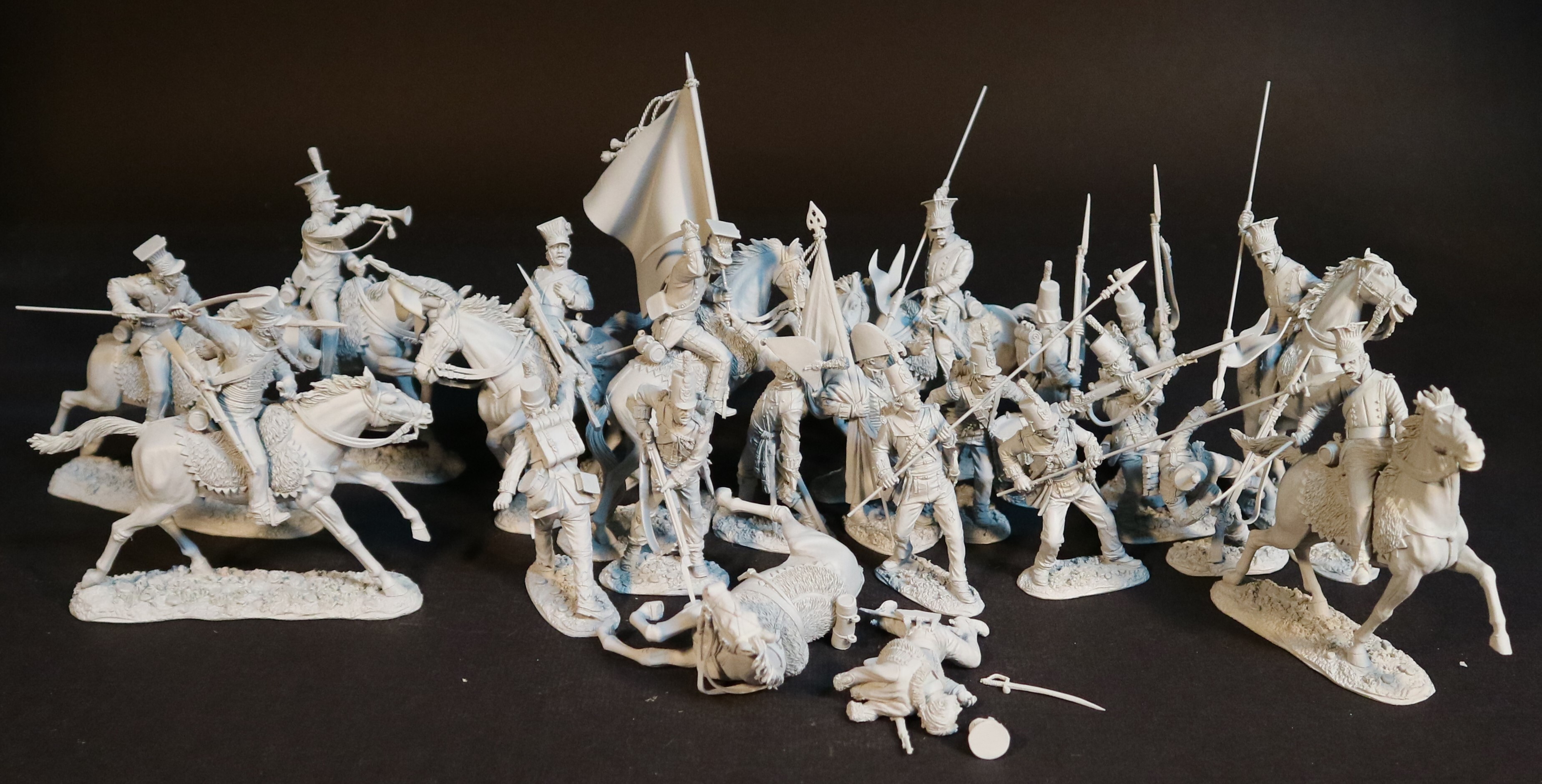
The Allied army consisted of approximately 32,000 troops, including 6,000 British soldiers, Portuguese units, and Spanish contingents under General Joaquín Blake, supported by 38 artillery pieces
The French fielded around 23,000 men with 40 guns, including 4,000 cavalry
Beresford commanded the Anglo-Portuguese forces, while Blake led the Spanish troops, and Marshal Soult commanded the French Army of Andalusia
The battle began at dawn on 16 May 1811, with French infantry and cavalry attacking the Allied positions. Godinot’s Brigade led the initial assault, supported by Werle’s Brigade and French dragoons
The French attack was initially beaten back. As the British regiments cheered and prepared to pursue the enemy and hasten them on their way, dark clouds above opened up and a torrential storm of rain and hail came lashing down into the faces of the redcoat infantry, rendering their muskets useless and making it almost impossible to see anything more than a short distance away.
Then out of the blinding sheets of rain, large dark shapes came looming straight for them, the ground shaking beneath their pounding weight.
For infantrymen formed in line, this was the worst of all nightmares, cavalry.
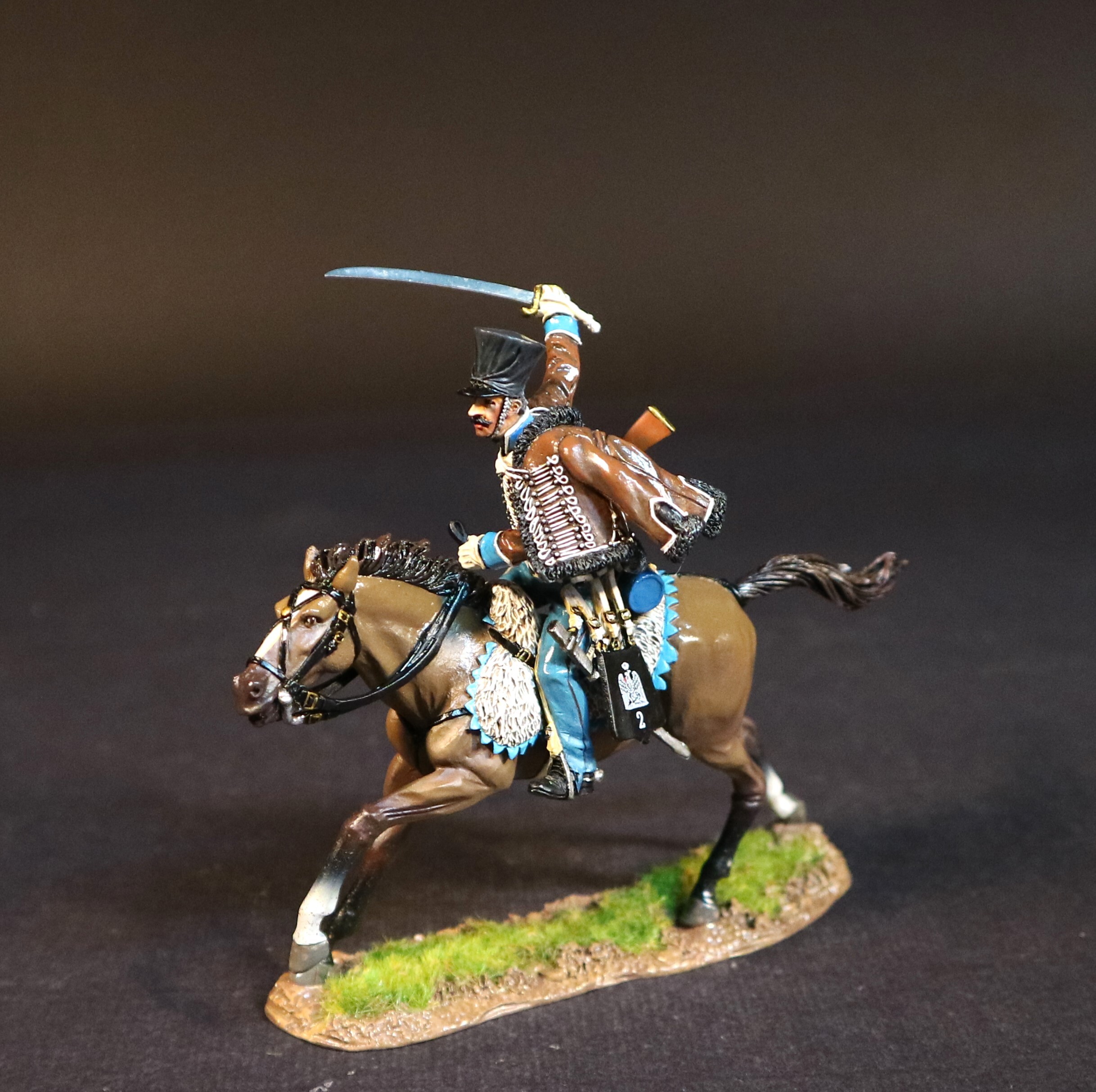
The French cavalry commander with two regiments, Polish 1st Lancers of the Vestibula Legion, and the French 2nd Hussars, had a total of around 800 cavalry.
With Colborne’s British Brigade blinded and almost disarmed by the rain, the cavalry attack launched into their unprotected right flank and rear was one of the most devastating cavalry attacks of the Peninsular War.
Under normal circumstances, infantry under cavalry attack would form square, but in this circumstance the infantry were strung out in line and offered easy prey for cavalry.
It is impossible to reload and fire a flintlock musket in heavy rain. The loading process involves pouring powder from a torn open paper cartridge into an open priming pan, where raindrops will turn it into a useless black slurry.
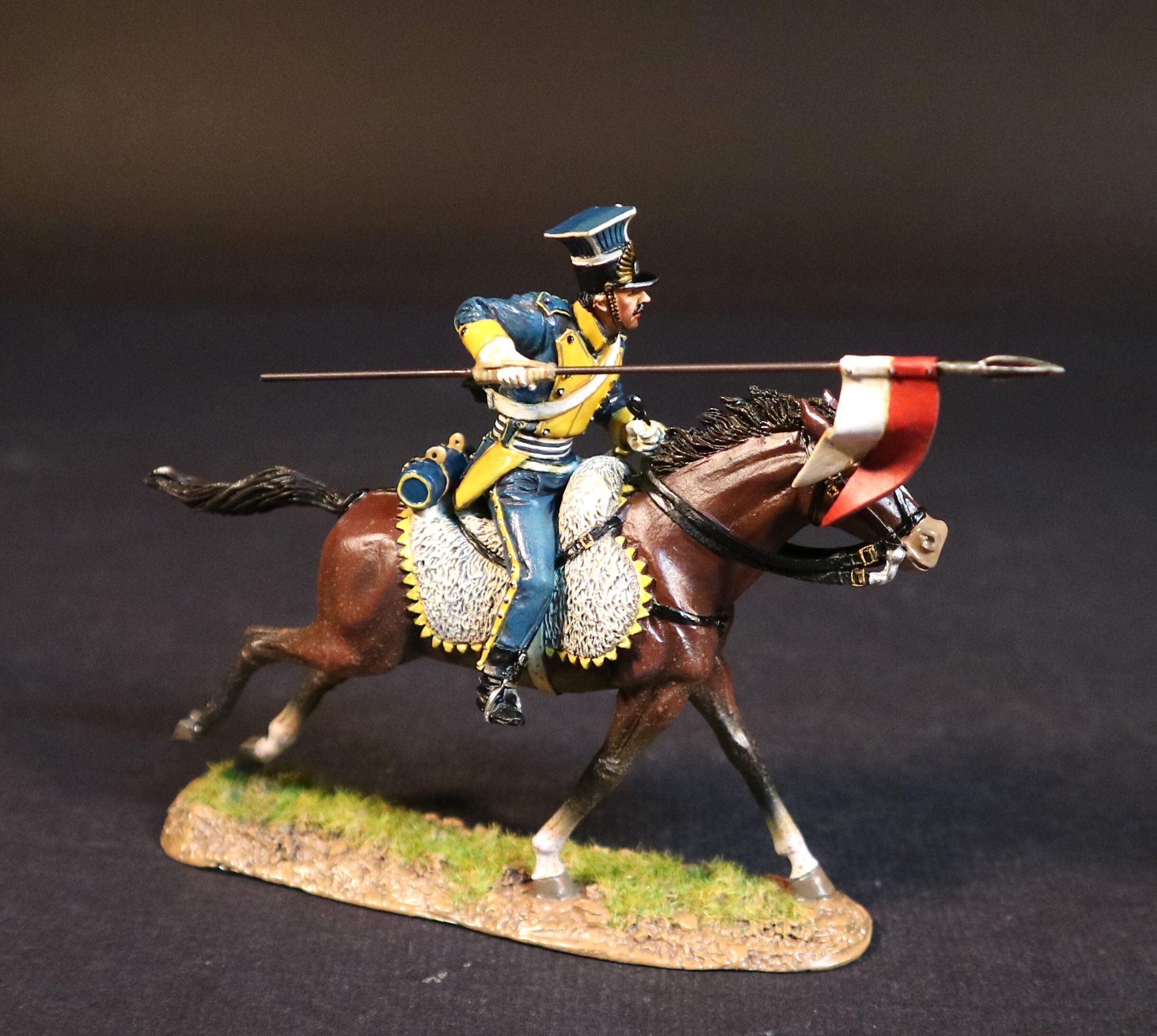
The front rank of the lancers were armed with nine foot lances, which also made it impossible for infantry even with fixed bayonets to fight back with any effect.
The first regiment to receive the Lancers charge was the 1/3rd The Buffs, and they virtually disappeared as the enemy cavalry rode them down.
The charge was even the more horrific as the Polish lancers went about their business roughlessly and giving no quarter even to the wounded men.
LIEUTENANT MATTHEW LATHAM
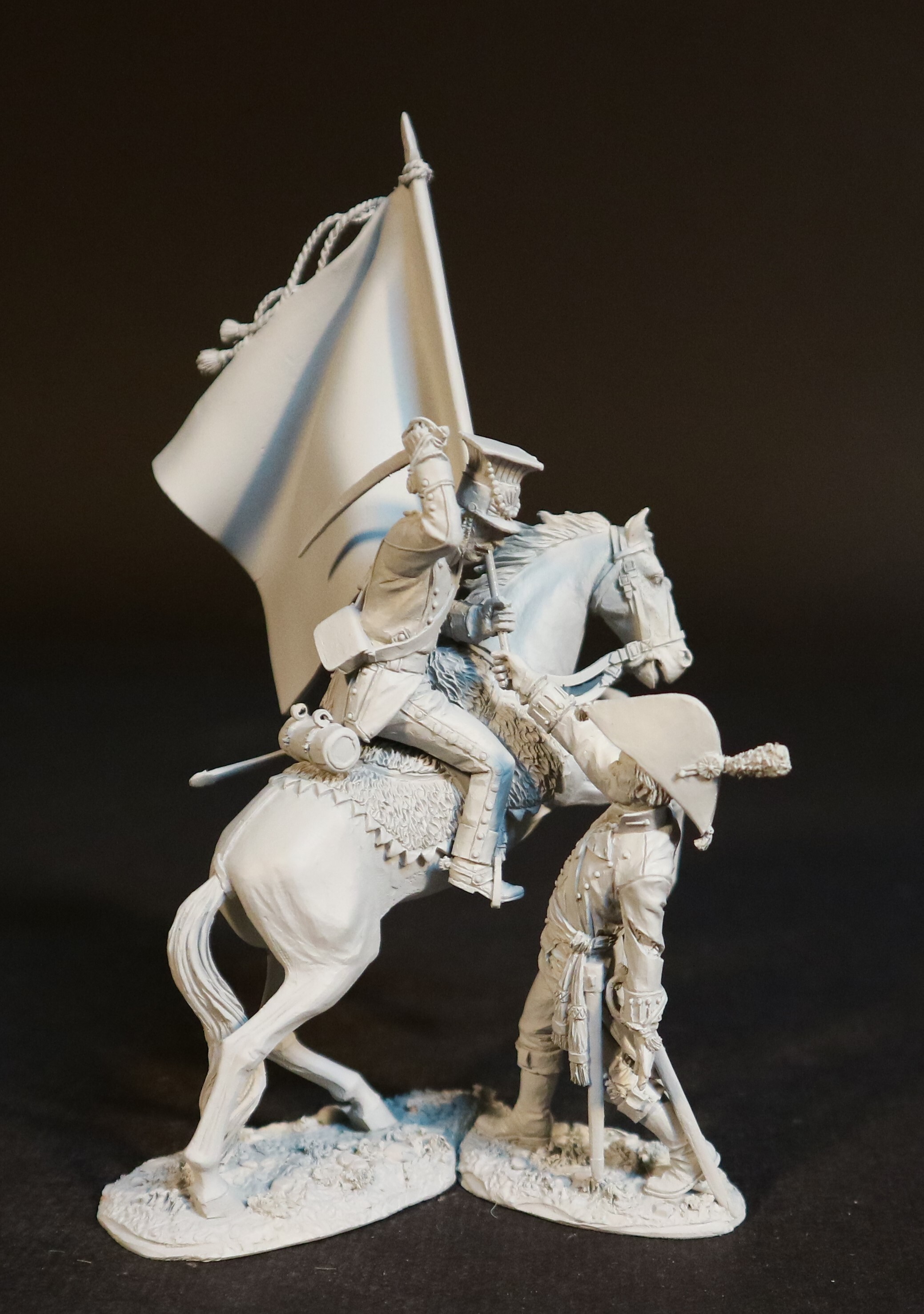
The 1/3rd’s Colours were predictably the focus of particularly savage fighting. Ensign Charles Walsh was holding proudly aloft the King’s Colour, the staff of which had been cut in two by a roundshot. Walsh was wounded and in danger of losing the colour when Lieutenant Matthew Latham rushed over to him and took the Colour himself.
In one of the most famous incidents of the Peninsular War, Latham defended the Colour furiously, fighting off the enemy cavalry with his flimsy 1796 pattern infantry officers’ sword.
One enemy sabre cut took away his nose and half his face, whilst another severed his left arm, but still Latham refused to give up the colour.
So many enemy cavalrymen tried to get at him that ironically this jostling press of riders almost certainly saved his life, by hampering one another so that no one man could deal him the fatal blow.
Cut down and trampled on, Latham was left for dead. That night, when the dazed survivors of the regiment were scouring the field, he was found terribly maimed and disfigured but still alive, with the King’s Colour hidden beneath his body.
ENSIGN EDWARD THOMAS
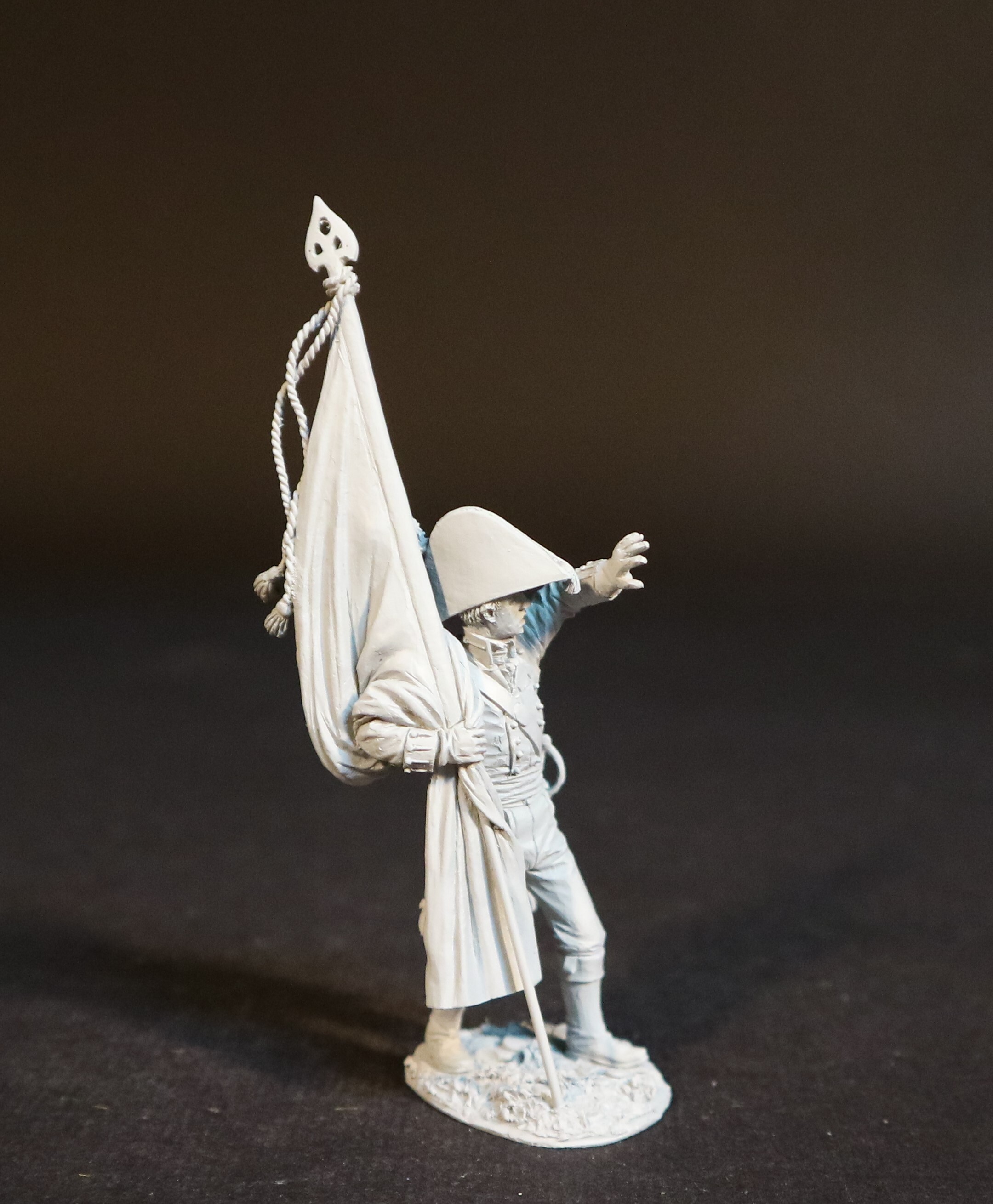
Carrying the Buffs’ Regimental Colour was 16 year old Ensign Edward Thomas. The Polish lancers surged around the colour, stabbing and hacking at those who defended it. When summoned to surrender the Colour the boy replied, “Only with my life!”, and was immediately cut down, mortally wounded.
He was buried with all care possible by a sergeant and a private, the only two survivors of his company, which originally consisted of sixty three men when taken into action.
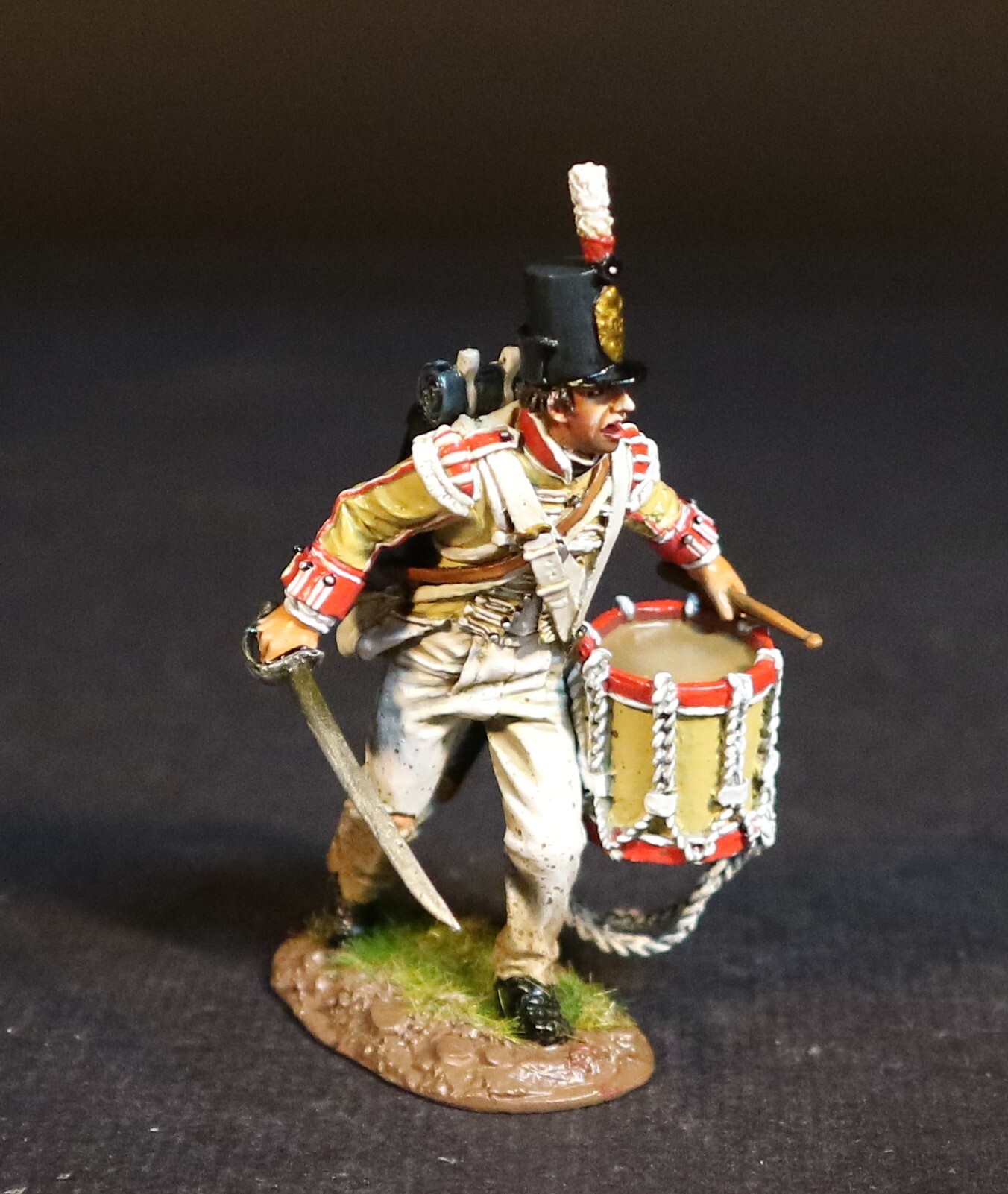
The Regimental Colours did not remain long in the hands of the enemy, it was recovered by Sergeant William Gough of the 1/7th Royal Fusiliers towards the end of the battle.
The Buffs suffered appalling casualties of four officers and 212 men killed, 14 officers and 234 men wounded, and 2 officers and 177 men taken prisoner.
A total of 643 casualties out of a strength of 27 officers and 728 men, or just over 85%.
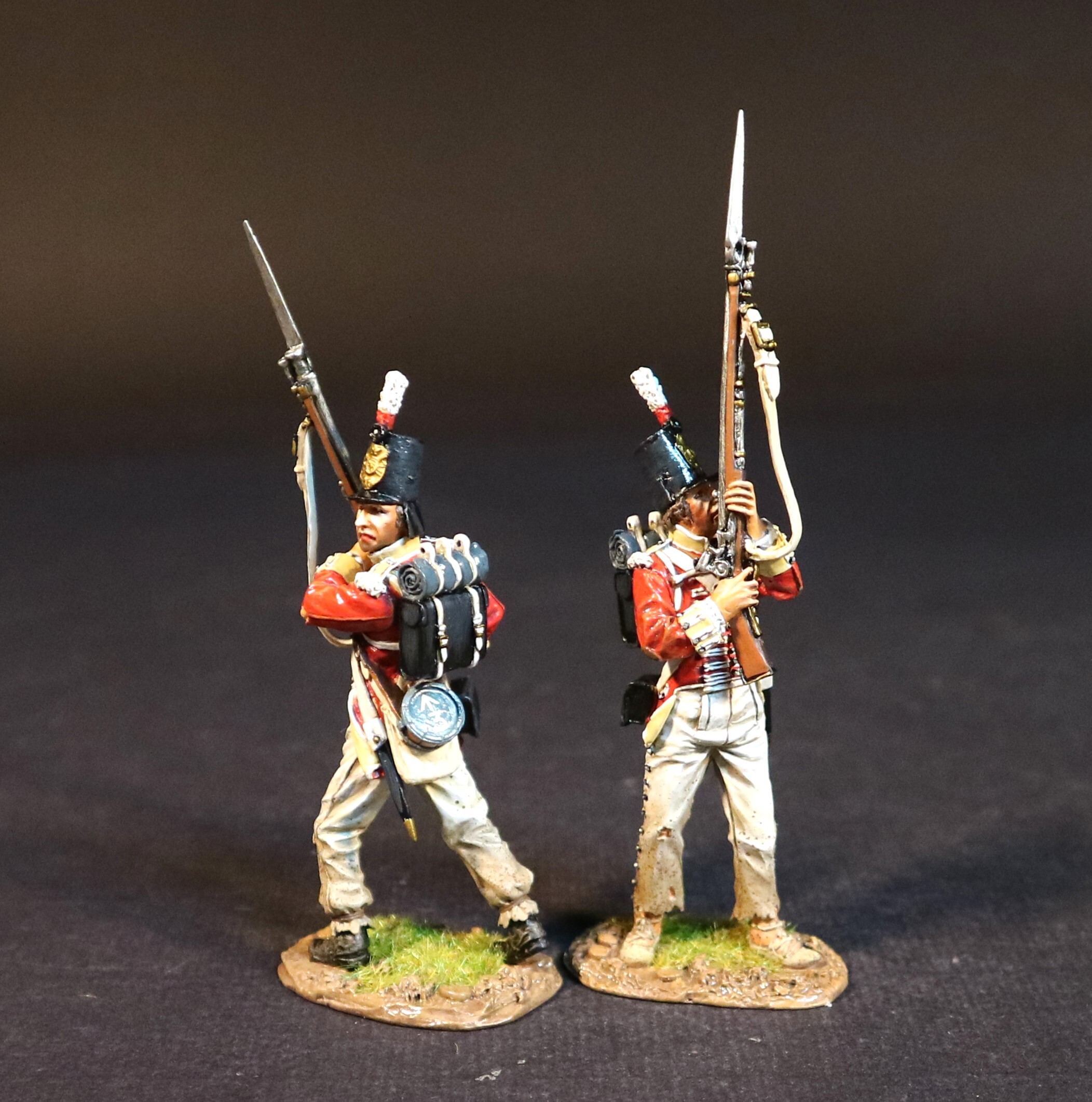
Despite the carnage caused by the French and Polish cavalry, they themselves suffered just over 200 casualties, which represented almost a quarter of their strength.
Roughly two thirds of these casualties were suffered by the Polish Lancers, who also lost one of their guidons. Taken by a Spanish Infantry Regiment, and which rests today in the Cathedral of Seville.
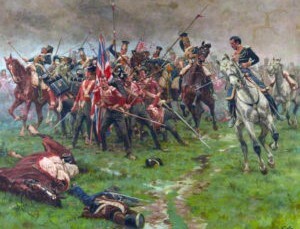
THE JJD diorama display is inspired by the 1912 historical battle painting “The Battle Of Albuera” by the British artist William Barnes Wollen.
The painting depicts the 3rd Regiment of Foot rallying round their regimental Colours as they are attacked by the French cavalry.
It was exhibited at the Royal Academy’s 1912 Summer Exhibition at Burlington House.
It is now in the collection of the National Army Museum in Chelsea.
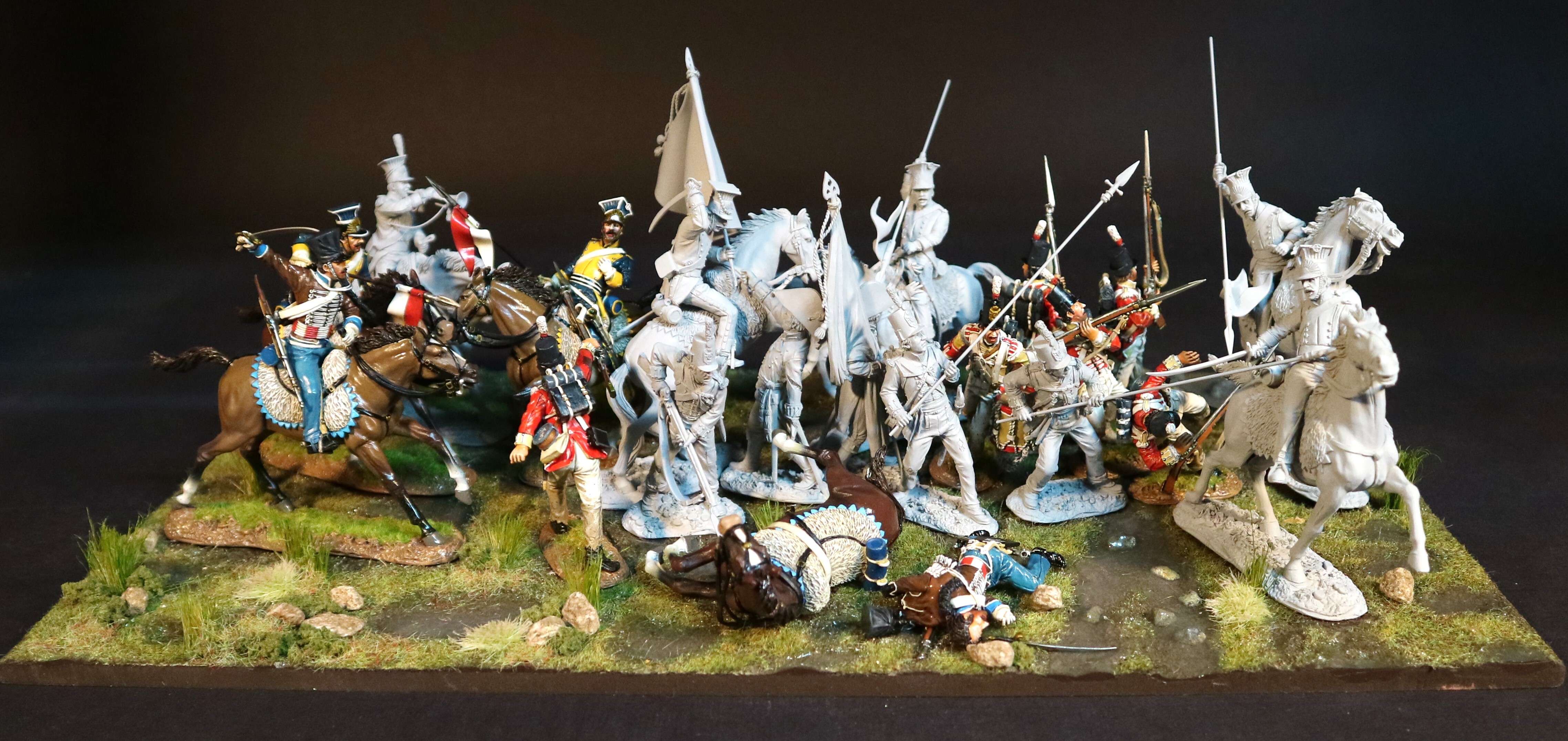
THE BATTLE OF ALBUERA, “A STORM OF LANCERS”, DISPLAY STAND
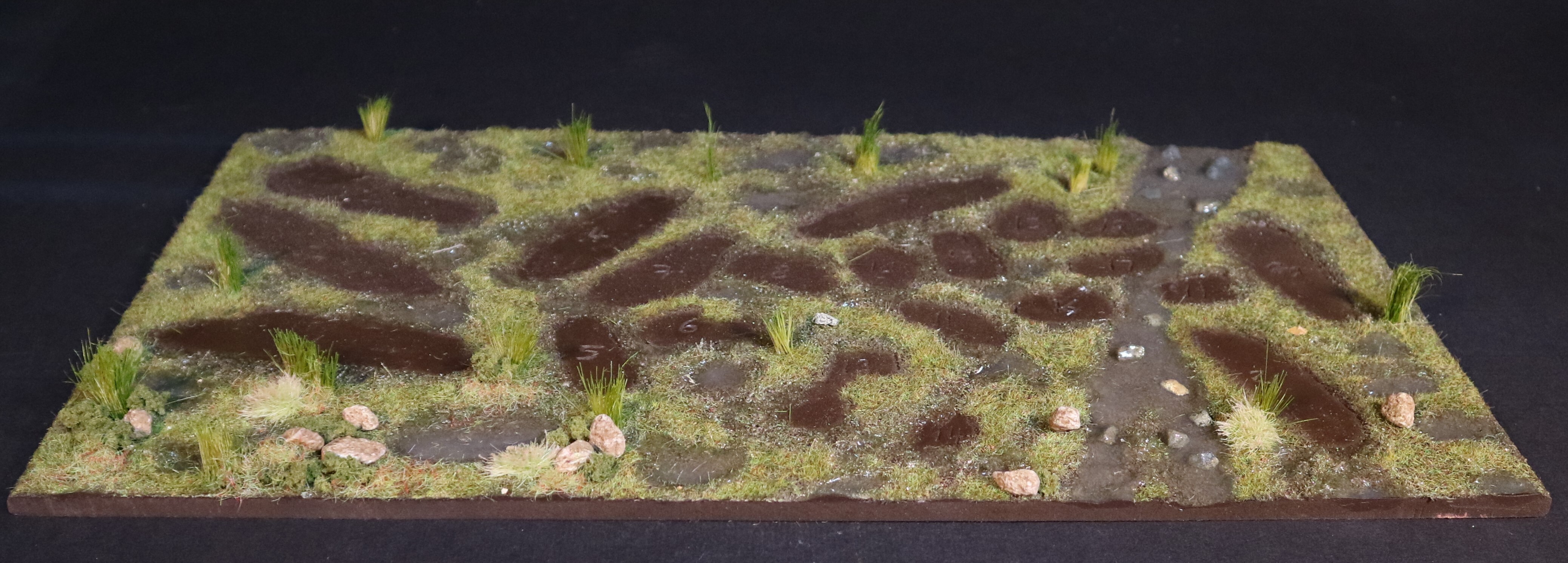
JJD is pleased to announce, that once again, after working closely with LEE SMITHSON of SHEFFIELD MINIATURES, there will be a custom made display stand for this series.
S52 THE BATTLE OF ALBUERA, “A STORM OF LANCERS”, DISPLAY STAND,
dimensions 15 ¾ ” x 8 ¾ ” x ¼ ”
Each figure in each set will be numbered, which will correspond to a number inscribed into the display stand.
THE FIRST OF THE ALBUERA SETS WILL BE AVAILABLE FROM OCTOBER 2026